🌿 Yarrow: A Practical Herb for Everyday Use
By Keisha Bruce, New Dawn Herbal
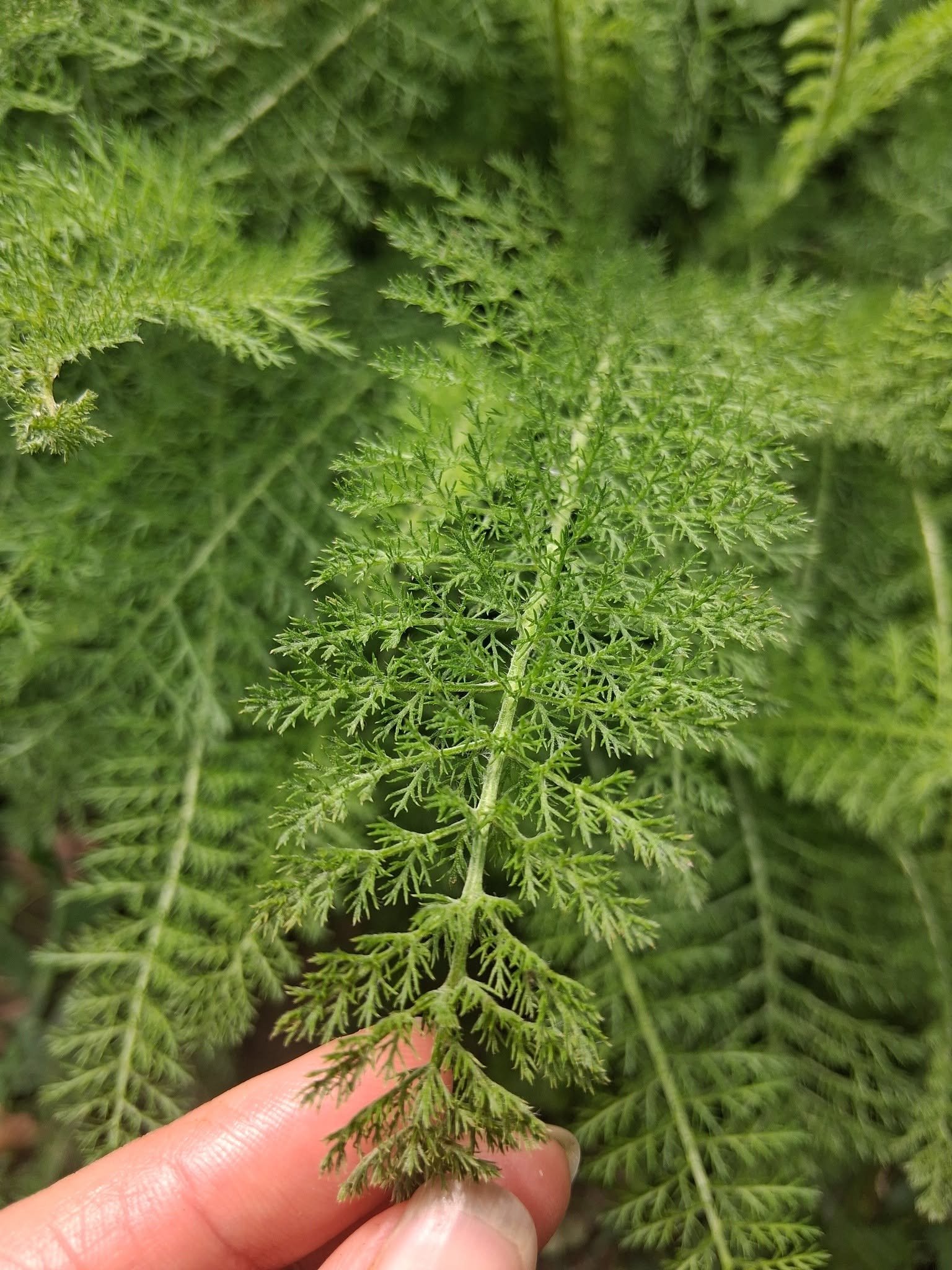
Close up of Yarrow leaf
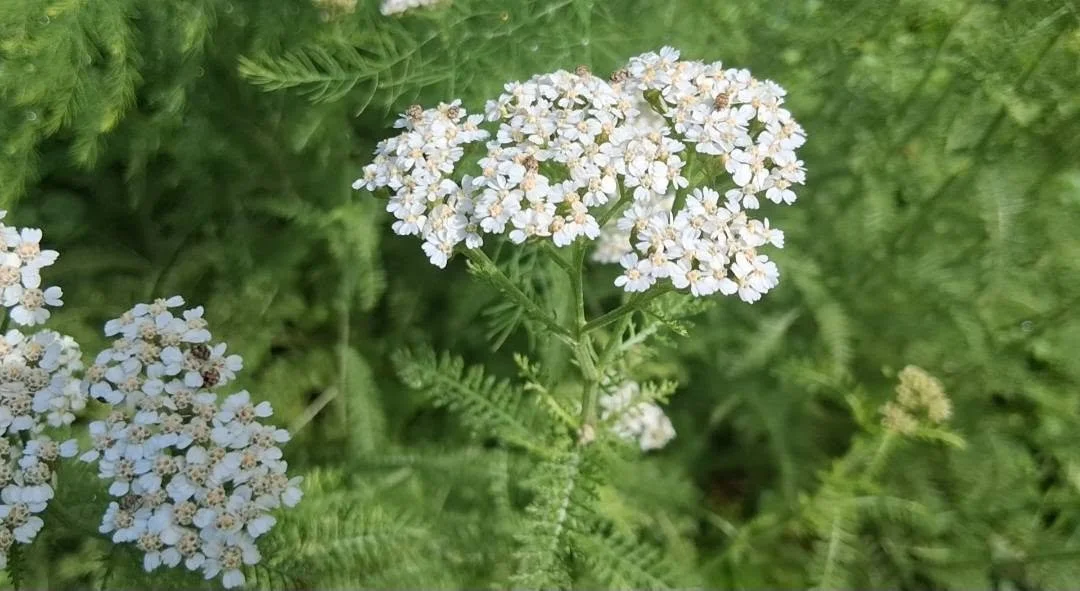
Yarrow (Achillea millefolium) is one of those plants that has followed humans around for centuries. It grows along roadsides, in sunny fields, and in the edges of our gardens — quietly offering its feathery leaves and flat-topped flowers to anyone curious enough to stop and look.
As a horticulturist and herbal educator here in Kentucky, I love teaching people about yarrow because it’s simple, accessible, and deeply rooted in old-time folk use. It’s the kind of plant your grandparents or great grandparents might’ve known, the kind you can recognize once and never forget.
Today, I want to share a little about how to identify yarrow, how to harvest it respectfully, and how to turn it into a practical salve you can use at home.
🌼 Identifying Yarrow in the Wild
Yarrow is easy to spot once you get familiar with its features:
Leaves: soft, feathery, and finely divided — almost fern-like
Flowers: flat-topped clusters (called umbels) of small white blooms
Growth habit: upright stems, usually 1–2 feet tall
Habitat: sunny, open areas — fields, meadows, roadsides, disturbed ground
In Kentucky, yarrow is abundant from late spring through early fall. It’s a resilient plant that thrives in full sun and well-drained soil.
🌿 Harvesting Yarrow Ethically
Even though yarrow grows everywhere, I always encourage mindful harvesting:
Choose healthy, clean patches away from roadsides, train tracks, and sprayed areas
Take only what you need
Leave plenty for pollinators and regrowth
Harvest on a dry day, once the morning dew has lifted
You can use both the flowers and leaves for topical preparations. I prefer harvesting when the flowers are fully open and the plant looks vibrant.
🌱 What Yarrow Is Used For
Yarrow has a long history of use as a vulnerary, or, wound-supporting herb. Traditionally, it’s been used for:
minor cuts and scrapes
bug bites
skin irritation
slowing minor bleeding
general skin support
In this blog post, we’re focusing on topical use only — specifically infused oils and salves.
⚠️ Safety Notes
Yarrow is generally well tolerated, but:
People with Aster family allergies should patch test first
Avoid using on deep or serious wounds
Always listen to your body and use herbs with care.
🌿 A Quick Note on Foraging Safety
When you’re out gathering yarrow, plant identification is everything. Yarrow is a safe and abundant herb, but it grows near a few plants you don’t want to mix up — especially Queen Anne’s Lace or worse, poison hemlock.
Here’s a simple way to keep yourself safe:
✔️ Yarrow (Achillea millefolium)
Feathery, fern‑like leaves
Flat, umbrella‑shaped flower clusters
Soft, flexible stems
Leaves run all the way up the stem
Smells herbal and pleasant when crushed
✔️ Queen Anne’s Lace (Daucus carota)
One single, large umbrella-shaped flower head
Often has a tiny purple dot in the center
Leaves look like carrot tops, not feathers
Hairy stems (I heard this from my herb school teacher, “Queen Anne has hairy legs” made it easy for me to remember! lol)
Safe plant, but not yarrow
❌ Poison Hemlock (Conium maculatum)
Smooth, hollow stems with purple blotches
Leaves are lacy but not feathery
Unpleasant “mousey” smell
Taller, more aggressive growth
Highly toxic — never harvest near it!
🌼 The easiest rule:
If the leaves aren’t feathery, it’s not yarrow. If the stem has purple blotches, walk away.
Yarrow is a wonderful plant to work with, but like all foraging, a little caution goes a long way. When in doubt, use a field guide, take a photo, compare it at home, or ask someone experienced.
🌞 Making Yarrow Infused Oil
Infused oils are one of the simplest ways to work with herbs. You can use fresh or dried yarrow, but I prefer dried for oil infusions, (Except for specific herbs, like St. John’s Wort)— it reduces moisture and helps prevent spoilage.
Basic Yarrow Oil Infusion
Fill a clean jar about 2/3rds full with dried yarrow (flowers + leaves)
Cover completely with olive oil (or sunflower, jojoba, etc.)
Stir or shake gently to release air bubbles, top off with more carrier oil, if needed.
Cap the jar and let it infuse for 4–6 weeks
Strain well and store in a cool, dark place
Your oil will keep for months if stored properly.
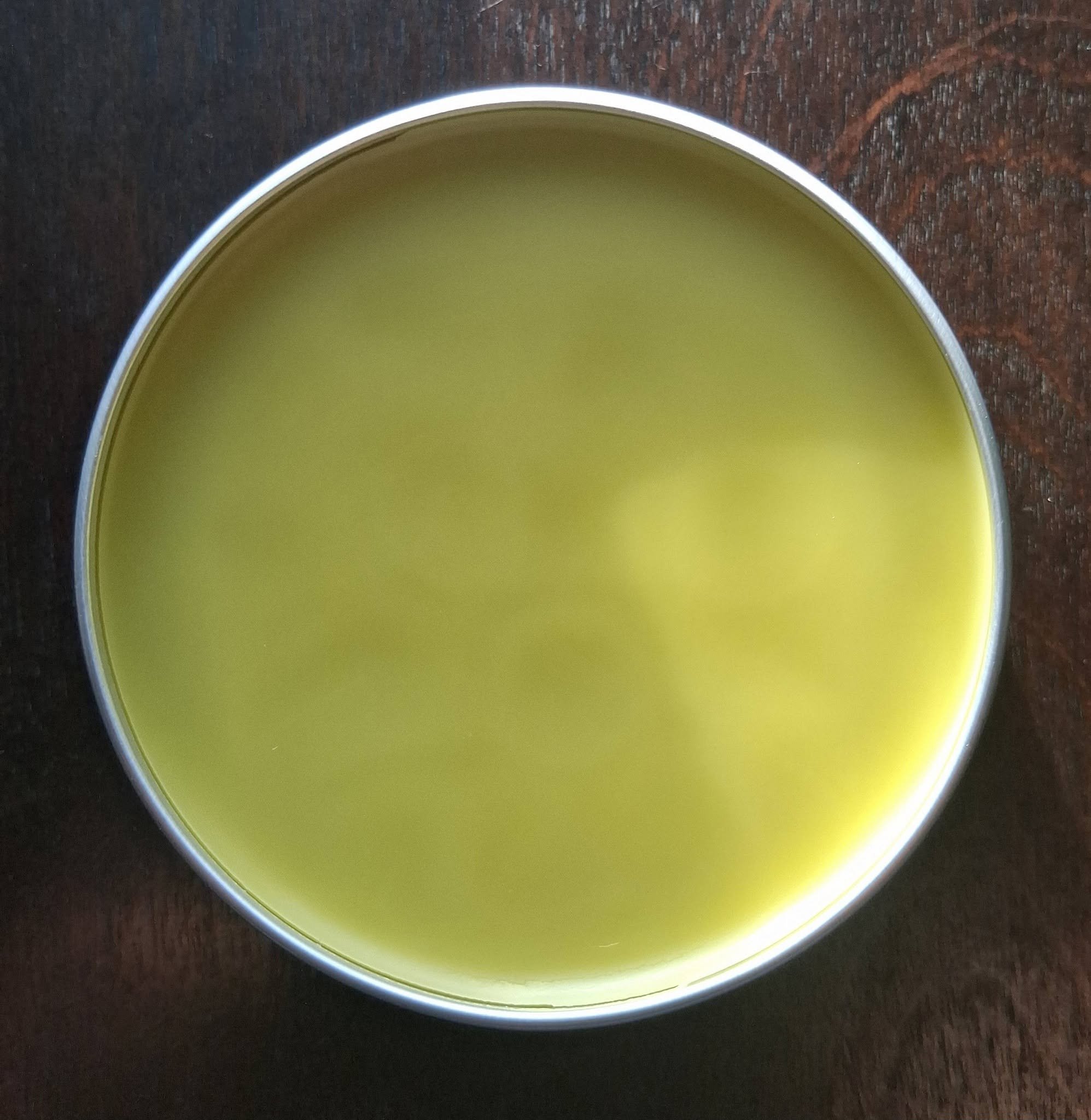
🟡 Yarrow Salve Recipe (1:4 Ratio)
This is a simple, effective salve you can make at home and once you know the basics, it is very easy to do the
same with other herbs or combinations of herbs!
Ingredients
1 part beeswax
4 parts yarrow-infused oil
Optional: a few drops of vitamin E for shelf life
Instructions
Add beeswax to a heat-safe bowl or double boiler.
Warm gently until the beeswax melts completely.
Add your yarrow-infused oil(1:4 ratio — for example, 1 oz beeswax to 4 oz infused oil).
Stir well. (If adding Vitamin E or Essential oil, allow your liquid salve to cool for a few minutes before adding)
Pour into tins or jars.
Let cool 10–15 minutes until firm.
Cover with lids after completely cooled.
This salve is wonderful for minor cuts, scrapes, bug bites, and general skin support. A little goes a long way.
🌾 Final Thoughts
Yarrow is one of those herbs that feels like home — familiar, accessible, and practical. Working with it connects us to folk knowledge and gives us simple tools to care for ourselves and our families.
If you’re new to herbalism, yarrow is a perfect place to start! And if you’ve been working with plants for years, it’s one of those herbs you return to again and again.
I hope this little guide helps you feel more confident harvesting, preparing, and using yarrow in your own home.
If you’d like to learn hands-on, keep an eye out for my next Yarrow Salve Workshop — I’d love to have you there.