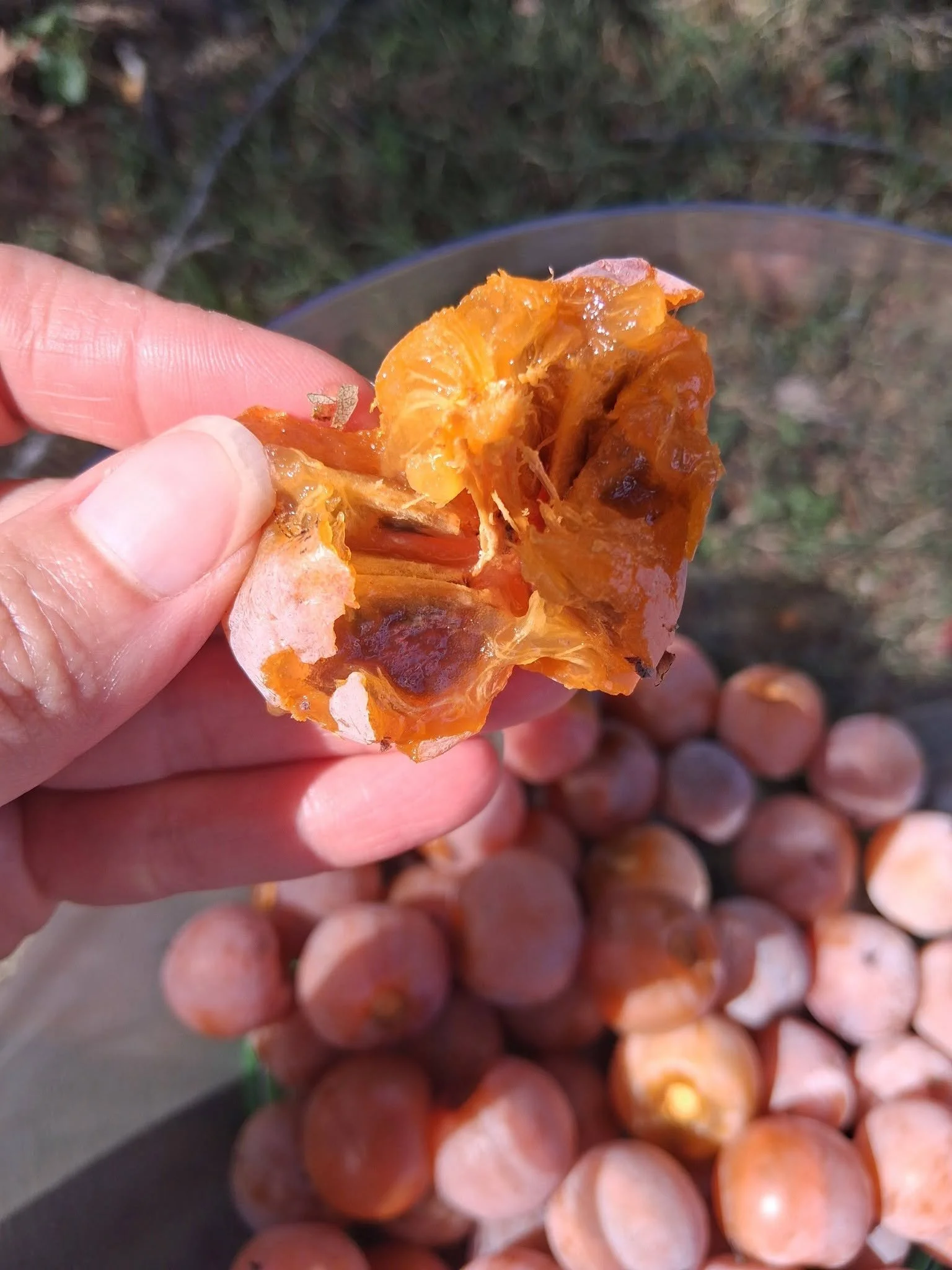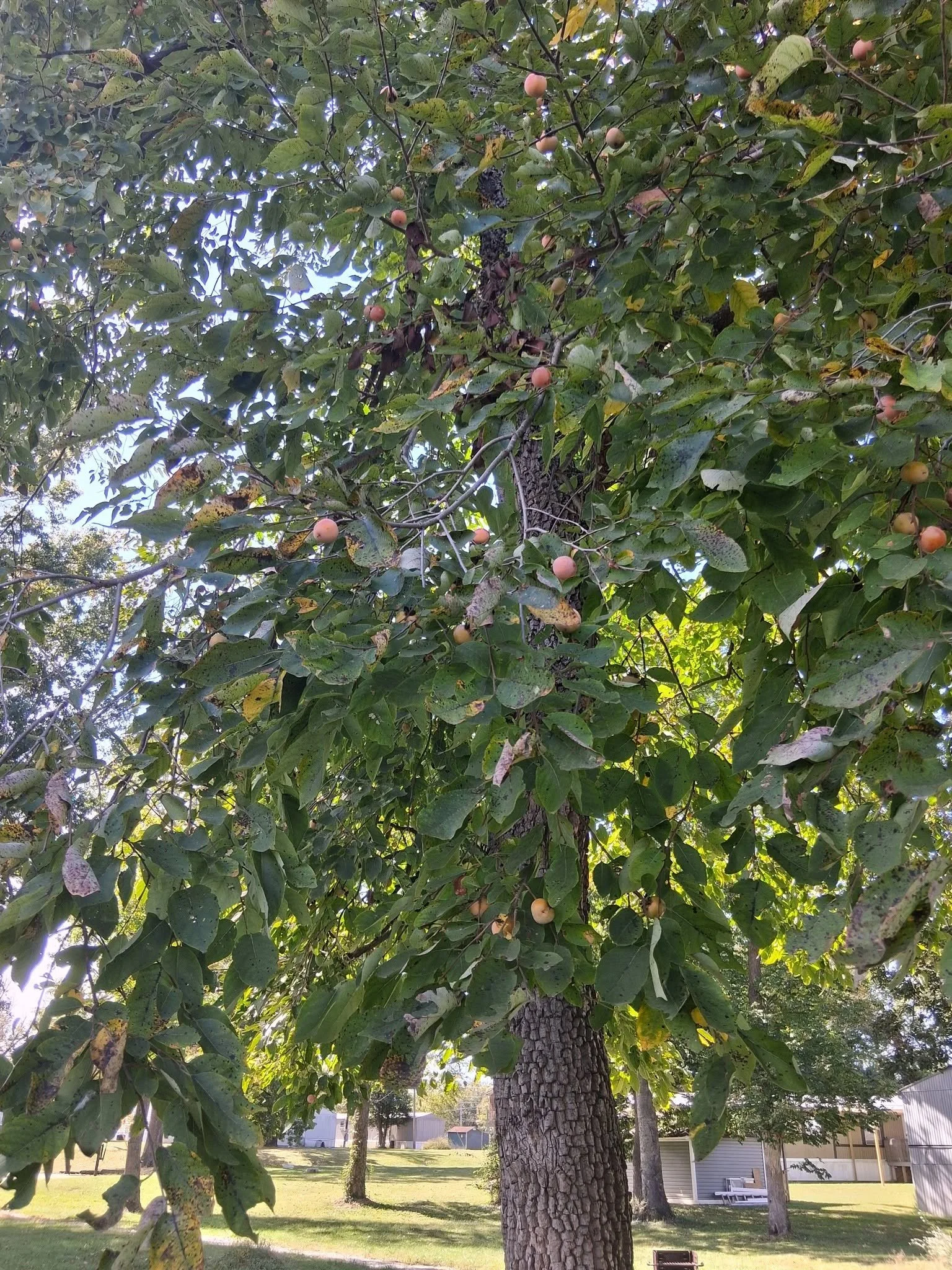
Diospyros virginiana l, Common Persimmon
Yesterday I spent some time gathering one of my favorite wild foods of the season, American persimmons!
If you've never tasted a ripe persimmon, you're missing out on one of nature's sweetest treats. When fully ripe, the fruit becomes soft and almost pudding-like, with a rich flavor that reminds many people of apricots, dates, honey, and spice.
One important thing to know, persimmons must be fully ripe before eating. An unripe persimmon contains high levels of tannins and can leave your mouth feeling dry and puckered. Trust me, it is not a fun experience! lol A ripe persimmon, on the other hand, is incredibly sweet and delicious! Persimmons are often called the "fruit of the gods," a nickname rooted in their botanical name, Diospyros, which comes from Greek. Standing under a persimmon tree on a crisp autumn day, gathering sun-ripened fruit that tastes almost like honey and spice, it's easy to imagine why people have held them in such high regard for generations.
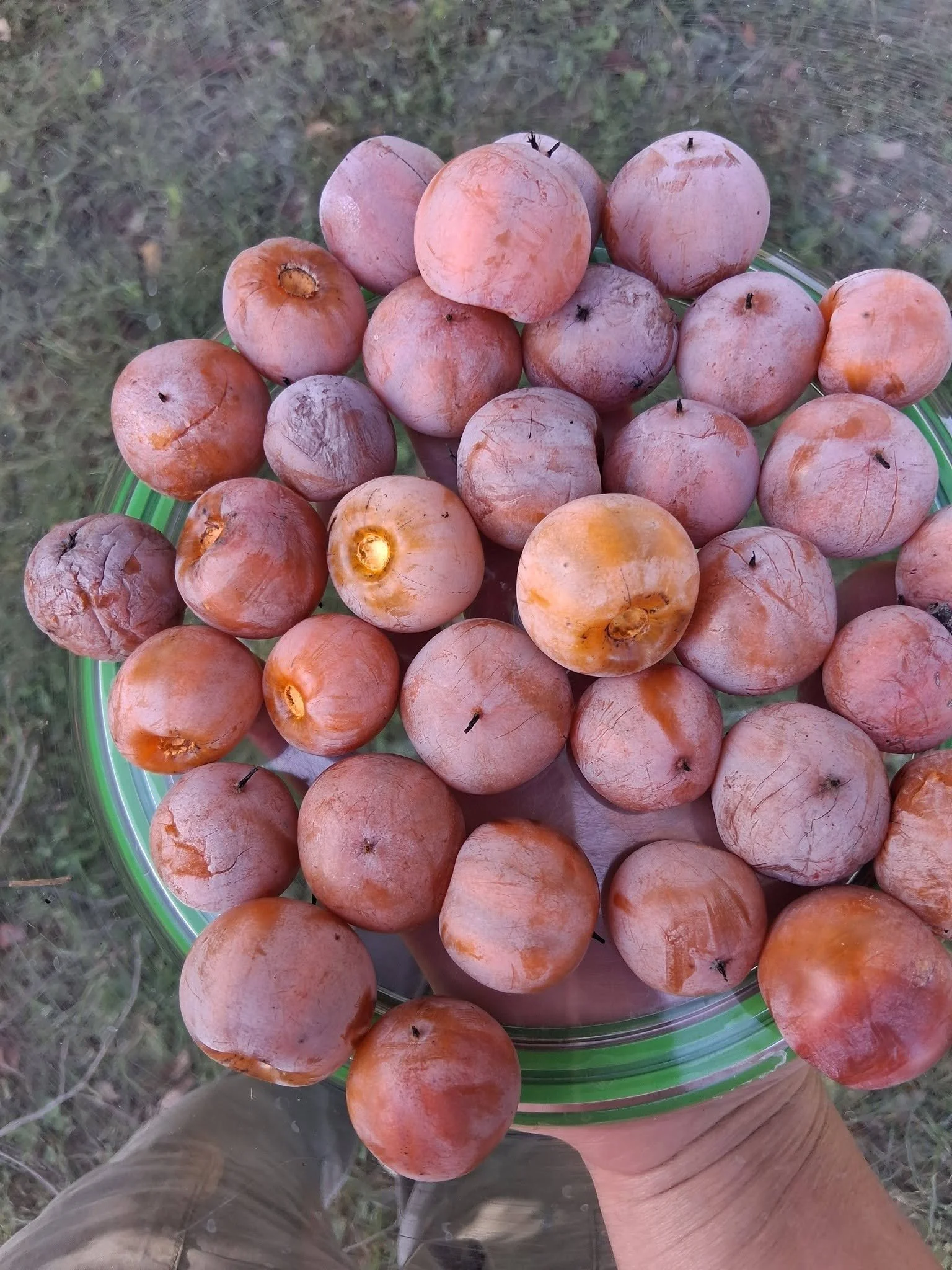
Persimmons are a wonderful example of the abundance that exists all around us. Many trees grow along field edges, fence rows, woodland borders and neighborhoods throughout Kentucky, often dropping more fruit than wildlife can consume. The best time to harvest them is after the first frost, but sometimes you can get lucky before a frost and find a few ripe on the ground!
They're also packed with nutrients, including fiber, vitamin A, vitamin C, and antioxidants.
A Little Folklore
Of course, no persimmon season would be complete without checking the seeds!
A long-standing piece of Appalachian and Southern folklore says that splitting open a persimmon seed can offer clues about the upcoming winter.
Inside the seed you'll find a tiny shape that resembles one of three tools:
🥄 Spoon = Lots of snow
🔪 Knife = Bitter cold and cutting winds
🍴 Fork = A mild winter
Now, before anyone rushes out to buy a snow shovel based on persimmon seeds, it's important to remember that this is a folk tradition, not meteorology. 😊
Still, it's one of those wonderful seasonal rituals that connects us with generations of people who paid close attention to the natural world.
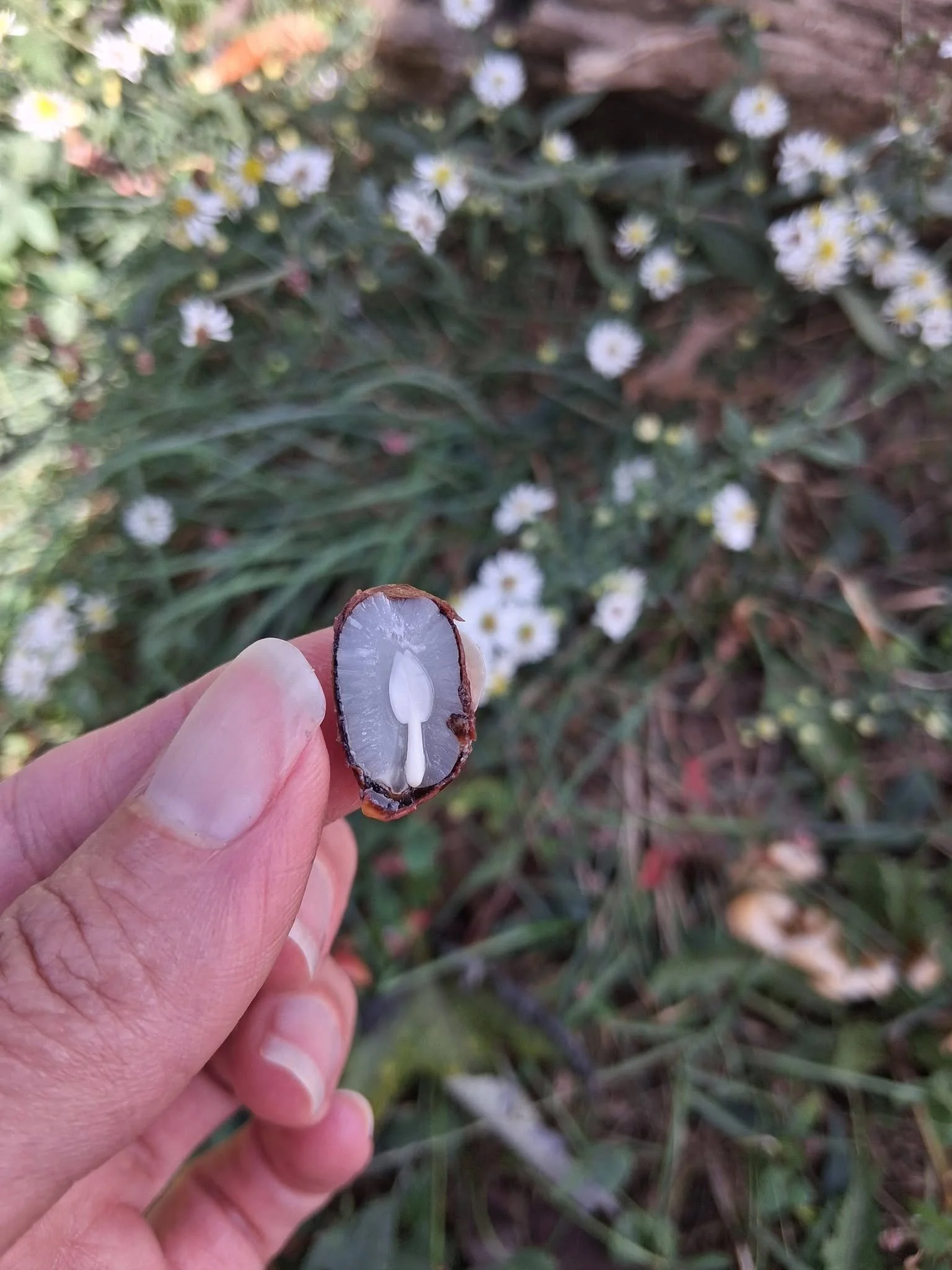
This year's seeds? Mostly spoons!
We'll see if winter agrees.
Why Foraging Matters
Foraging isn't just about collecting food. It's about learning your landscape, noticing the changing seasons, and reconnecting with the abundance that exists in our own communities.
Whether you're gathering persimmons, blackberries, walnuts, or pawpaws, every foraging trip is an opportunity to deepen your relationship with the land and the places we call home.
Have you ever tried a wild persimmon? I'd love to hear your favorite way to enjoy them.